
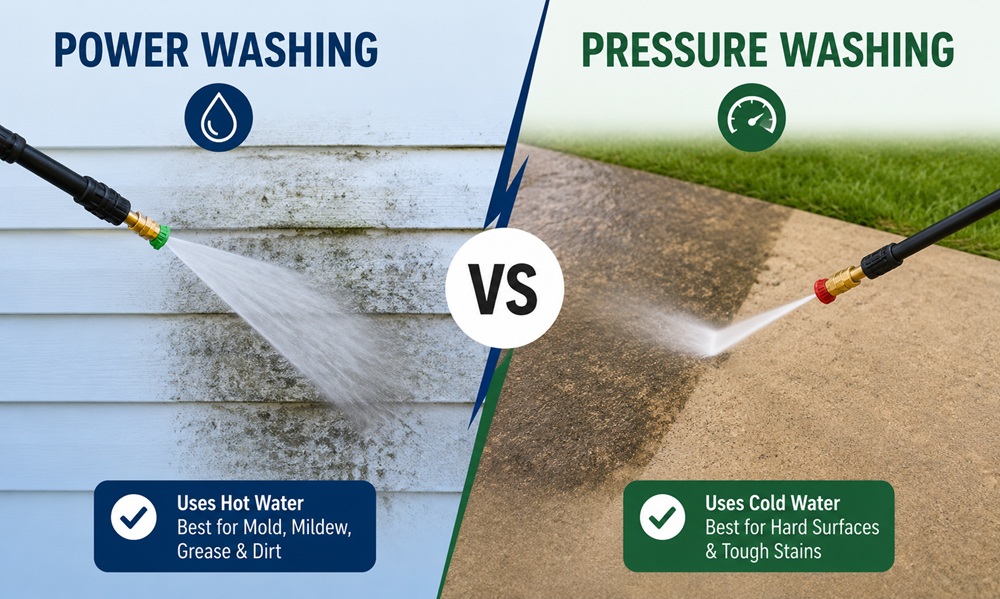
Many people believe power washing and pressure washing are the same thing, just different names for spraying water at high force. That’s mostly a myth. The real difference is heat: a power washer heats the water, while a pressure washer uses water at whatever temperature comes out of the hose. Both use high-pressure spray, but that one variable changes what each machine handles best.
Knowing which one you actually need can save you from either damaging a surface or paying for a service level you didn’t need, and it can also help you have a more informed conversation with a contractor before booking a job.
The Myth: “They’re Interchangeable”
It’s an easy assumption, since both machines look similar and both blast water at high PSI. Homeowners often book whichever service shows up first in a search without realizing the heated water in power washing changes the cleaning outcome for certain jobs, particularly ones involving oil, grease, or grime buildup that cold water alone struggles to break down.
This mix-up isn’t just a minor semantic issue. Using the wrong method on the wrong surface, like blasting hot, high-pressure water on painted wood siding, can strip paint, damage the wood grain, or force water behind siding panels where it doesn’t belong.
The Facts: How They Actually Differ
| Feature | Pressure Washing | Power Washing |
| Water temperature | Cold or ambient | Heated |
| Best for | Dirt, mud, loose debris | Grease, oil, mold, gum |
| Common surfaces | Siding, fences, patios | Driveways, garage floors, commercial areas |
| Risk of surface damage | Lower on soft materials | Higher if used carelessly on wood or soft siding |
Pressure washing relies purely on water force, which makes it gentler for surfaces like vinyl siding, wood fencing, and outdoor furniture. Power washing’s added heat breaks down sticky or oily residue more effectively, which is why it’s often the better choice for driveways with oil stains or commercial kitchen exteriors, where cold water alone would require far more scrubbing or chemical treatment to get the same result.
Practical Advice: Which Should You Use?
For a wood deck, vinyl siding, or outdoor furniture, pressure washing at a lower PSI setting is usually the safer choice. The cold water still lifts dirt, pollen, and mildew without the added risk that heat brings to softer materials, and it’s generally the method most homeowners can handle themselves with a rented or consumer-grade machine.
For a concrete driveway with oil stains, a garage floor, or a patio with stubborn grime, power washing typically gets better results in less time, since the heat helps break the bond between grease and concrete. Many professional cleaning companies default to power washing for these harder surfaces specifically because it cuts down on the amount of scrubbing or chemical detergent needed.
What Is the Right PSI for Home Use?
Most residential jobs, like siding or fencing, only need 1,300 to 1,900 PSI. Concrete surfaces can usually handle 2,500 to 3,000 PSI. Using too high a setting on a delicate surface is one of the most common ways homeowners accidentally strip paint or gouge wood, regardless of whether the water is hot or cold.
It’s worth starting on the lower end of the recommended range and testing on a small, inconspicuous area before committing to the whole surface. This is especially important on older wood or siding that may already be more fragile than it looks.
Nozzle choice matters just as much as PSI. A narrow, concentrated nozzle increases the effective force at the surface even at the same PSI setting, which is why professionals often switch nozzles between tasks rather than relying on pressure adjustments alone.
Can You Rent Either Machine?
Yes, both pressure washers and power washers are available for rent at most home improvement stores across the US. If you’re only doing one seasonal cleaning, renting is often more cost-effective than buying, especially for the heated units, which tend to be pricier and bulkier than standard cold-water pressure washers.
Rental staff can usually walk you through the correct nozzle and PSI setting for your specific job, which is worth asking about even if you’ve used a pressure washer before, since settings vary between models.
Should You Hire a Professional Instead?
For large driveways, roofs, or anything involving ladders and height, hiring a professional is usually worth the cost. Professionals also carry the right nozzle attachments and detergents for specific stains, which can be the difference between a surface that looks new and one that looks streaky or unevenly cleaned.
Professional services also carry insurance, which matters if something goes wrong, like water finding its way into a window or an outlet. That protection is worth factoring in alongside the price when deciding whether to DIY a larger or more complex job.
A Quick Way to Decide
If the job involves oil, grease, or built-up grime on a hard surface like concrete, power washing is the better tool. If you’re cleaning siding, a deck, patio furniture, or anything with a painted or wood finish, pressure washing with a lower PSI setting is typically the safer and equally effective choice.