
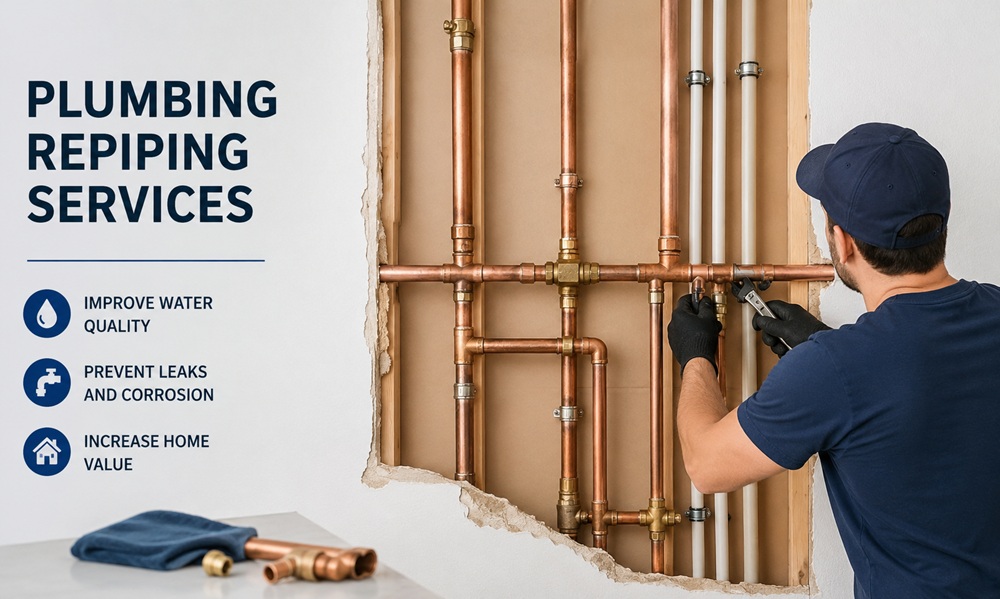
Repiping replaces a home’s entire water supply system, usually because the existing pipes are corroded, leaking repeatedly, or made from an outdated material like galvanized steel. A typical repipe for a single-family home takes two to five days and costs between $4,000 and $15,000 depending on home size, pipe material, and access.
Finding a Repiping Plumber Near You
Repiping is a bigger job than most plumbing repairs, so it’s worth getting at least three quotes before hiring anyone. Look for a plumber who is licensed, carries liability insurance, and has done full-home repipes specifically, not just repairs. Older neighborhoods with homes built before the 1970s often have plumbers in the area who specialize in this exact job, since galvanized and early copper piping in those homes tends to fail around the same age.
Ask any plumber you’re considering for references from repiping jobs specifically, and ask how they handle wall and ceiling patching afterward. Some plumbing companies subcontract the drywall repair, which can add time to the project if it’s not coordinated well.
Repipe vs. Repair: How They Compare
| Factor | Full Repipe | Spot Repair |
| Cost | $4,000-$15,000 | $150-$500 per repair |
| Time | 2-5 days | A few hours |
| Longevity | 25-50+ years | Temporary fix |
| Best for | Widespread corrosion, recurring leaks | One isolated leak in otherwise good pipes |
If you’re calling a plumber for the third leak in two years, that’s usually a sign the pipes themselves are failing system-wide, and repair is just delaying an inevitable repipe.
What Is Repiping and When Is It Needed?
Repiping means removing old water supply lines throughout a home and replacing them with new pipe, most commonly PEX or copper. It’s typically needed when pipes are galvanized steel, when there’s a pattern of recurring leaks, when water pressure has dropped noticeably, or when water comes out discolored due to internal pipe corrosion.
Copper vs. PEX: Which Is Better for a Repipe?
PEX is flexible, faster to install, and generally cheaper than copper, which makes it the more common choice for repipes today. Copper lasts longer and has a long track record, but it costs more in materials and labor, and it’s more vulnerable to freezing in unheated spaces. Many plumbers now recommend PEX for most residential repipes unless local code or personal preference calls for copper.
| Do You Need a Permit? In most cities, yes. Full repiping typically requires a plumbing permit and a final inspection to confirm the new system meets local code. A licensed plumber will normally handle the permit process, but confirm it’s included in your quote rather than assumed. |
What to Expect on Repiping Day
Most repiping projects follow a similar sequence: shutting off the home’s water supply, opening access points in walls or ceilings, removing old pipe, running new lines, and pressure-testing the system before closing everything back up. Homeowners typically need to relocate for at least part of the workday since water will be off, and in larger homes, for more than one day.
Common Signs That Point to Repiping Over Repair
- Rust-colored or discolored water, especially from hot taps
- A noticeable, gradual drop in water pressure throughout the house
- More than one pipe leak within a 12-month period
- Visibly corroded pipes wherever they’re accessible, such as in a basement or crawl space
- A home built before 1970 that has never had plumbing upgrades
Any single sign on its own might just need a repair, but two or more together are a strong signal that the whole system is aging out at once, and a full repipe will likely save money compared to a string of repeated repairs over the following years.
How Do You Know If a Repiping Quote Is Fair?
Get at least three quotes and compare not just the total price, but what’s actually included. A noticeably cheaper quote sometimes means a cheaper pipe material, less thorough patching, or a shorter warranty period. Ask each plumber to break down labor, materials, permits, and drywall repair separately, since a lump-sum number makes it harder to spot where corners might be cut.
Expert Advice on Choosing Materials and Contractors
A repiping plumber with experience will walk the home first and identify every fixture the new lines need to reach, not just quote a flat number over the phone. Get the material spelled out in writing, since some quotes use CPVC, which is cheaper but less durable than PEX or copper in many climates.
A well-done repipe should come with a warranty, often 25 years or more on materials and workmanship. That warranty is worth confirming in writing before work begins, since it’s one of the clearest signals of a contractor who stands behind the job.
Should You Repipe an Older Home?
If a home still has its original galvanized pipes and is more than 40-50 years old, repiping is usually a matter of when, not if. Signs that point toward doing it sooner rather than later include rust-colored water, especially from hot water taps, noticeably weak water pressure across multiple fixtures, or more than one pipe leak in the past year. Waiting until a pipe actually bursts almost always costs more than scheduling the work proactively.