
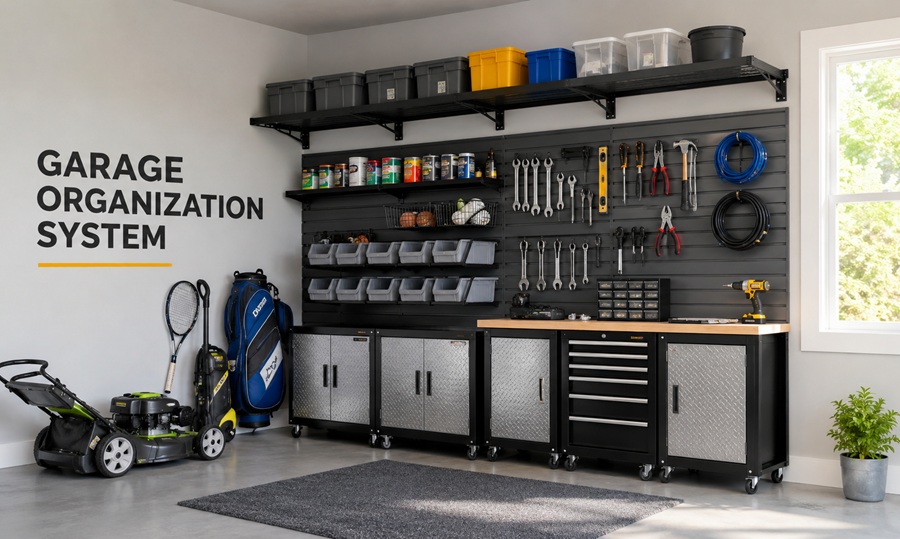
The most effective garage organization system uses zones — dedicated areas for tools, seasonal items, sports gear, yard equipment, and vehicle care — combined with vertical and overhead storage to keep the floor clear. Setting up five basic zones is usually enough to organize even a cluttered two-car garage in a weekend.
The Garage Organization Checklist
- Sort everything into keep, donate, and discard before buying storage
- Assign a zone for tools and workbench items
- Assign a zone for seasonal or holiday storage
- Assign a zone for sports and recreational gear
- Assign a zone for yard and garden equipment
- Use wall and ceiling space before adding floor shelving
Step One: Sort Before You Store
Buying storage before sorting is the most common reason garage organization projects stall halfway through. Pull everything out, sort into keep, donate, and discard piles, and only then start planning where things go. This step alone often clears 20 to 30 percent of garage clutter before a single shelf goes up.
What Is the Best Garage Storage System?
The best system combines wall-mounted slat board or pegboard for tools, overhead racks for rarely-used seasonal items, and modular shelving units along one wall for bins and boxes. This combination uses vertical space efficiently and keeps the garage floor clear enough to actually park a car, which is often the whole point of the project.
Zone 1: Tools and Workbench
A pegboard or slat wall system above or near a workbench keeps frequently used tools visible and within reach. Outline tool shapes on the pegboard with a marker so everything has an obvious home, which makes it much easier to notice — and fix — when something goes missing.
Zone 2: Seasonal Storage
Holiday decorations, off-season sports equipment, and rarely-used items belong up high, ideally on overhead ceiling racks that keep them out of the way without taking up floor or wall space used for daily items. Clear bins with labels make it easy to identify contents without pulling everything down.
Zone 3: Sports and Recreation Gear
Bikes, balls, and outdoor gear do well with a dedicated wall-mounted rack system — bike hooks, ball caddies, and hooks for helmets or bags. This keeps gear accessible for grabbing on the way out the door instead of buried under other items in a bin.
Zone 4: Yard and Garden Equipment
Long-handled tools like rakes and shovels take up more space leaning against a wall than they need to. A wall-mounted tool rack designed specifically for garden tools keeps them upright, organized, and off the floor, while smaller items like gloves and hand tools fit in a nearby bin or drawer.
Zone 5: Vehicle Care and Chemicals
Keep automotive fluids, cleaning chemicals, and car care supplies in a dedicated cabinet, ideally one that can be secured if there are kids or pets in the home. Grouping these items together also makes it easier to notice when something is running low or needs to be replaced.
How Do I Organize My Garage Cheaply?
Repurpose what you already have before buying new storage. Sturdy cardboard boxes work temporarily while sorting, command hooks handle light items, and a simple wood pallet mounted on the wall makes a free-to-low-cost tool rack. Save spending for the items that get the most daily use, like the workbench zone.
Budget Tips for Garage Organization
- Buy shelving units on sale at the end of the season rather than at project start
- Use clear, uniform bins for a more organized look without a full system overhaul
- Install a few overhead racks before a full shelving wall — they solve the biggest space issue for the least cost
- Label everything so the system stays organized instead of drifting back to clutter
Small Garage Organization Considerations
In a one-car or shared garage, prioritize vertical and overhead storage over floor shelving, since floor space is at a premium. A slim rolling cart can replace a full workbench in tight garages, and it has the added benefit of being movable when the car needs the space.
Frequently Asked Questions
How Much Does a Garage Organization System Cost?
A basic DIY setup with pegboard, a few shelving units, and bins typically runs $200 to $600. A more complete system with overhead racks and modular cabinetry can run $1,000 to $3,000 or more, depending on garage size and materials chosen.
What Should Not Be Stored in a Garage?
Items sensitive to temperature swings — like paint, certain electronics, propane tanks, and some food items — generally shouldn’t be stored long-term in an uninsulated garage, since extreme heat or cold can damage them or, in the case of propane, create a safety hazard.
Overhead Storage: Getting the Most Out of Ceiling Space
Ceiling-mounted racks are one of the highest-value additions in garage organization because they use space that’s otherwise completely wasted. Rated to hold anywhere from 200 to 600 pounds depending on the model, they work well for bulky, infrequently used items like camping gear, artificial trees, or storage totes that don’t need to be accessed often.
Installation typically involves securing the rack directly into ceiling joists rather than drywall alone, so confirming joist locations with a stud finder before mounting is an important step that’s easy to skip in the rush to get organized.
Maintaining the System Over Time
A garage organization system tends to slip back into clutter within a few months without a maintenance habit. Setting a recurring reminder — seasonally, or right before major holidays when decorations come out — to do a quick reset keeps zones from blending back together and prevents the workbench area from becoming a catch-all again.
Flooring and Final Touches
Once zones and storage are in place, an epoxy or interlocking tile floor coating can make the space easier to sweep and gives it a more finished, intentional feel. This step is entirely optional, but it’s often the difference between a garage that looks organized and one that looks fully done.