
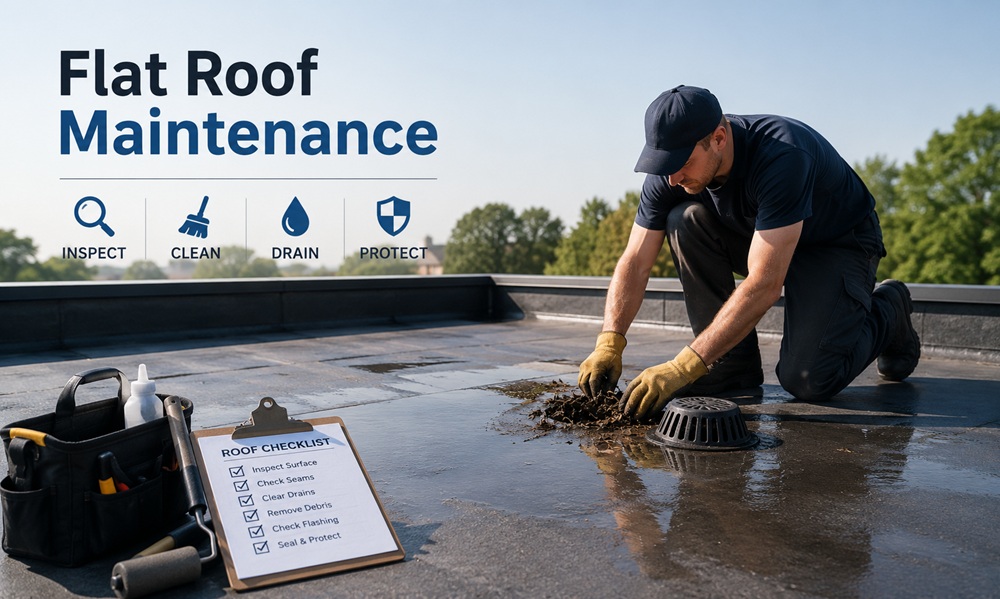
Flat roof maintenance means inspecting the surface twice a year, keeping drains and gutters clear of debris, checking seams and flashing for cracks, and dealing with ponding water before it damages the membrane. Most flat roof failures aren’t sudden; they’re the result of small issues, like a clogged drain or a hairline crack, that go unnoticed for months and slowly turn into a much larger repair.
A flat roof isn’t actually flat. It has a slight slope built in to move water toward drains. When that drainage path gets blocked, water sits, and standing water is the number one cause of flat roof leaks in the US, especially on older membranes that have already lost some of their flexibility.
Why Flat Roofs Need More Attention Than Sloped Roofs
Sloped roofs shed water quickly by design, relying on gravity and overlapping shingles to move rain off the structure before it has a chance to sit. Flat roofs rely on drains, scuppers, or gutters to do that job instead, and any blockage means water pools rather than running off the way it would on a pitched roof.
Over time, ponding water breaks down roofing membranes like EPDM, TPO, or modified bitumen faster than UV exposure alone would. The combination of trapped moisture and temperature swings causes materials to expand and contract repeatedly, which is what eventually leads to cracking, blistering, or seam separation.
This is why flat roofs typically need inspection twice a year, in spring and fall, rather than the once-a-year check that’s common for shingle roofs. Homes in regions with heavy rainfall or significant snow load benefit from an even closer eye, since both scenarios put extra strain on drainage systems that a sloped roof simply doesn’t have to manage in the same way.
Common Mistakes Homeowners Make
One of the most frequent mistakes is ignoring small ponding areas because they don’t look like a problem. Water sitting for more than 48 hours after rain is a sign the drainage slope isn’t working correctly, and it should be addressed rather than watched, since it rarely resolves on its own and tends to worsen with each additional rainfall.
Another common mistake is walking on the roof more than necessary or using the wrong footwear, which can puncture some membrane types. Foot traffic should be limited to inspections and maintenance, not used as a shortcut to another part of the property, and any regular access point should ideally have protective walk pads installed.
Many homeowners also skip checking flashing around vents, skylights, and the roof edge. Flashing failures are one of the most common leak points on flat roofs, and cracks here are easy to miss from the ground, especially since they often start small and only become visible once water has already made its way into the building envelope.
What Should a Flat Roof Inspection Include?
- Clear all drains, scuppers, and gutters of leaves and debris
- Look for ponding water more than two days after rain
- Check seams and flashing for cracks, bubbles, or separation
- Inspect for punctures, tears, or blistering on the membrane
- Trim overhanging branches that drop debris or scrape the surface
- Note any soft spots, which can indicate trapped moisture underneath
Working through this list methodically, rather than just glancing across the roof from a ladder, catches the small issues before they become expensive ones. Photographing each area during every inspection also makes it much easier to spot subtle changes over time.
A basic inspection kit is worth keeping on hand: a soft-bristle broom for clearing debris without damaging the membrane, a flashlight for checking shaded corners, and a notepad or phone for logging anything unusual. None of this requires special training, just a consistent habit of looking closely twice a year.
Next Steps: Building a Maintenance Routine
Set calendar reminders for spring and fall inspections, and add a third check after any major storm. Keep a simple log with photos each time, since spotting a new crack or blister is much easier when you have something to compare it to rather than relying on memory alone.
If ponding water lasts more than 48 hours in the same spot repeatedly, that’s usually a sign of a structural or drainage issue rather than something a homeowner can patch. At that point, it’s worth having a licensed roofer assess whether the slope needs correction, since a patch over an underlying drainage problem tends to fail again within a season or two.
When Should You Call a Professional?
Call a roofer if you notice active leaks inside the home, membrane that’s visibly bubbling or torn, or ponding that doesn’t drain within two days even after clearing debris. Catching these issues early is almost always cheaper than waiting for interior water damage to show up, which is often the first sign homeowners notice when maintenance has been skipped for too long.
A professional inspection is also worth scheduling every few years even if nothing looks obviously wrong, since a trained eye can spot early signs of wear, like thinning membrane or subtle seam separation, that aren’t easy to identify from a casual walk-through.
How Long Should a Well-Maintained Flat Roof Last?
Most flat roofing materials used in the US, including TPO and EPDM, are rated for 20 to 30 years when properly maintained. Roofs that skip regular inspections often need major repairs a decade or more before that, making routine maintenance one of the more cost-effective habits a homeowner can keep up with, especially compared to the cost of replacing an entire roof ahead of schedule.