
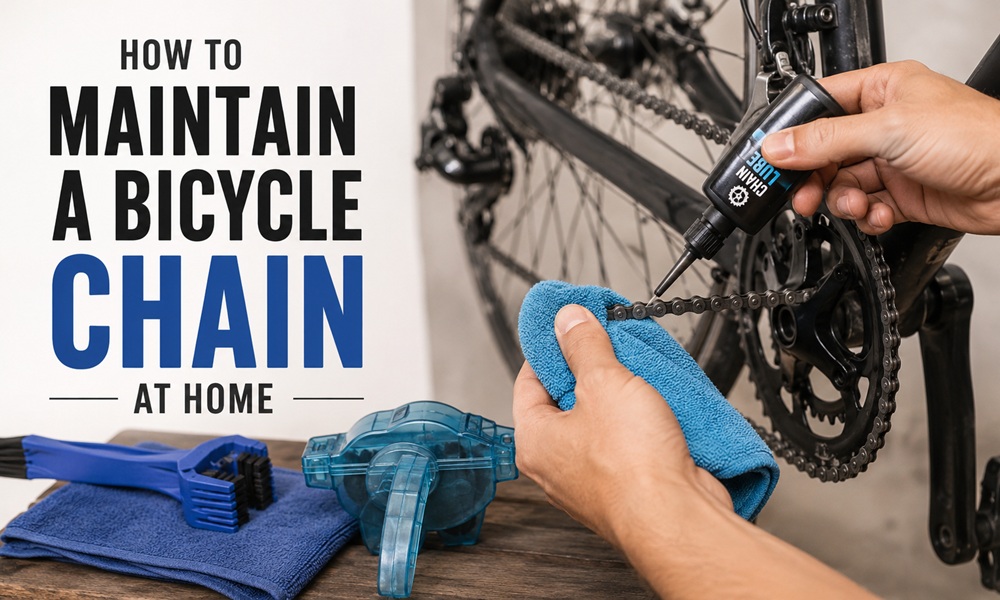
Maintaining a bike chain comes down to three habits: clean it, lubricate it, and check it for wear. Do this every few weeks, or after riding in wet or muddy conditions, and a chain that would normally last 1,500–2,000 miles can go even further. Skip it, and you’ll wear through your cassette and chainrings much faster, which costs far more to replace.
The Checklist: What You Need Before You Start
- A chain degreaser
- An old toothbrush or dedicated chain-cleaning brush
- Clean rags
- Bike-specific chain lubricant (wet or dry, depending on conditions)
- A chain wear indicator tool (optional but useful)
You don’t need a workstand, though it makes the job easier. Flipping the bike upside down or leaning it against a wall works fine for a quick clean.
Step-by-Step: Cleaning Your Chain
- Shift into the smallest cog to keep tension off the chain.
- Apply degreaser to a rag or brush and work it into the chain links, spinning the pedals backward to reach the full loop.
- Wipe away loosened grime with a clean section of rag, repeating until the rag comes away mostly clean.
- Let the chain air dry for a few minutes before lubricating — trapped degreaser attracts more dirt if you skip this.
Choosing the Right Lubricant
Should You Use Wet Lube or Dry Lube?
Wet lube suits damp, muddy UK conditions since it resists washing off in the rain, though it collects more road grime over time. Dry lube works better for drier stretches of weather, staying cleaner but needing more frequent reapplication. If you’re riding through a typical British winter, wet lube is usually the safer bet.
Apply lube sparingly — one drop per link is enough. Spin the pedals to work it in, then wipe off the excess with a rag. Excess lube on the outside of the chain does nothing for performance and just picks up dust.
How Do You Check for Chain Wear?
A worn chain stretches slightly over time, which accelerates wear on your cassette and chainrings if left unchecked. A chain wear indicator tool clips onto the chain and tells you within seconds whether it’s within a safe range or needs replacing. Without a tool, you can check manually: pull the chain away from the front chainring — if you can see daylight through more than a couple of millimetres of gap, it’s likely stretched.
How Often Should You Maintain Your Chain?
For regular commuters, cleaning and lubricating every 100–150 miles is a reasonable rhythm. Riders out in wet weather or muddy trails should check more often, sometimes after every ride. A quick wipe-down and lube top-up takes less than ten minutes once it’s part of your routine.
Table: Chain Care Frequency by Riding Conditions
| Riding Conditions | Clean & Lube Frequency |
| Dry commuting | Every 150–200 miles |
| Mixed weather | Every 100 miles |
| Wet or muddy trails | After every ride |
| Storage over winter | Once before storing |
Tips for Longer Chain Life
Avoid pressure-washing your bike directly at the chain and bottom bracket — the force can strip lubricant and push water into places it shouldn’t go. If you’re storing your bike over winter, give the chain a clean and a fresh coat of lube before putting it away, since damp storage conditions in a shed or garage can encourage rust.
Rotating between two chains on a bike you ride often can also extend the life of your cassette, since it spreads wear more evenly. This is more relevant for serious cyclists putting in high weekly mileage than casual riders.
Frequently Asked Questions
How do I know if my chain needs replacing?
Use a chain wear indicator tool, or check if shifting has become inconsistent and noisy despite cleaning and lubricating. A stretched chain is the most common cause of both.
Can I use household oil instead of bike lube?
It’s best avoided. Household oils like WD-40 aren’t formulated to withstand friction and weather the way bike-specific lubricants are, and they tend to attract more grit.
Does rain wash away chain lube?
Wet lube is designed to resist this better than dry lube, but any lube will eventually wash away in sustained rain. Reapply after a long, wet ride.
Is chain maintenance really necessary if I don’t ride much?
Yes — even bikes ridden occasionally benefit from a light lube application every few months, since chains can rust from sitting unused in damp conditions.
A clean, well-lubricated chain isn’t just about smoother shifting. It protects the more expensive parts of your drivetrain, saving you money on replacements down the line.