
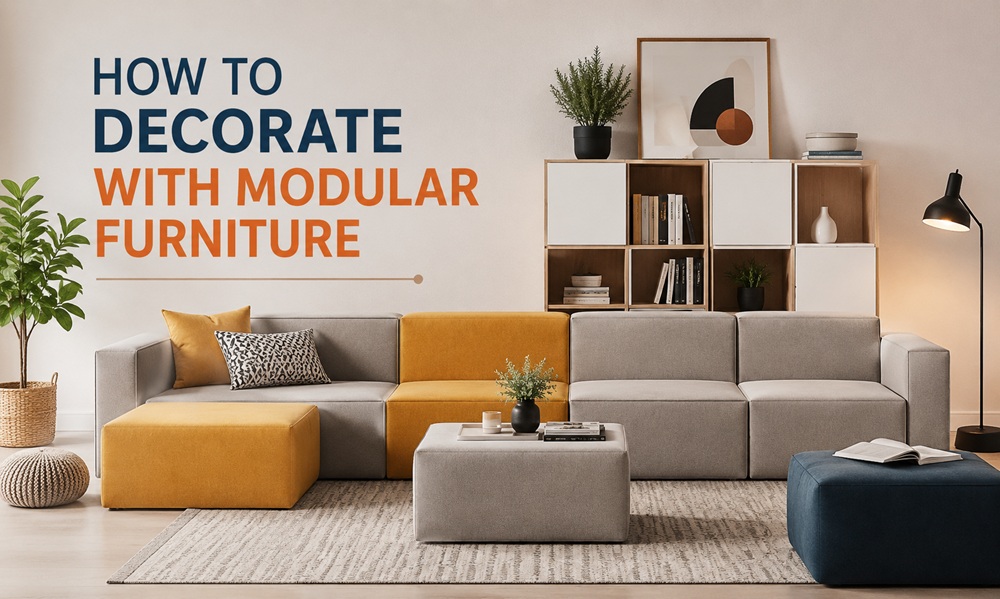
Decorating with modular furniture means choosing pieces that can be rearranged, combined, or separated to fit different needs, then anchoring them with a neutral base so the layout can change without disrupting the room’s style. Modular sofas, stackable shelving, and sectional pieces are popular because they adapt as your space or lifestyle changes, without requiring you to buy new furniture every time.
Quick answer: Pick a neutral-toned modular set, measure your room before buying, and plan at least two layout configurations from the start.
Checklist Before You Buy Modular Furniture
- Measure your room and doorways, since modular pieces still need to fit through entryways individually.
- Choose a neutral fabric or finish so pieces work in multiple configurations.
- Decide on your primary layout and one backup layout for guests or rearranging.
- Check how the pieces connect—some modular systems use clips or brackets that limit how freely you can rearrange them.
- Plan storage for any unused modules, like ottomans or extra seats.
What Is Modular Furniture Good For?
Modular furniture works well in homes where the room’s purpose changes often, such as apartments that double as a home office, or living rooms that need to convert for entertaining. Because the pieces separate and recombine, you can reshape a room in minutes rather than replacing furniture entirely.
Detailed Guide: Living Room Modular Layouts
In a living room, a modular sectional can be arranged in an L-shape for everyday lounging, then split into two separate sofas when you’re hosting guests and need more open floor space. Keep a low coffee table or ottoman that works regardless of configuration, since it acts as a visual anchor even as the seating shifts around it.
Detailed Guide: Bedroom and Home Office Use
Modular shelving units are especially useful in bedrooms and home offices because they can be stacked vertically in small rooms or spread horizontally in larger ones. A modular desk system lets you add a return or extra surface when you need more workspace, then remove it when the room needs to feel more open.
Common Configurations for Small Apartments
Apartment dwellers often benefit most from modular furniture, since it solves the problem of multi-use rooms. A modular ottoman that splits into two stools, or a sectional that breaks into a loveseat and an armchair, lets one piece of furniture serve several functions throughout the week.
Tips for Reconfiguring Without Losing Style
- Keep your color palette neutral across all modules so any combination still looks cohesive.
- Use rugs to anchor a layout visually, even when the furniture itself moves.
- Add one or two fixed elements, like a console table or floor lamp, that stay in place regardless of how the modular pieces shift.
- Avoid mixing modular systems from different brands, since connector mechanisms and cushion heights often don’t match.
Can Modular Furniture Fit Small Rooms?
Yes, and in many cases it’s better suited to small rooms than fixed furniture. Because pieces can be separated, you can choose just the modules that fit your space now and add more later, rather than committing to one large piece that may not adapt as your needs change.
Frequently Asked Questions
What is modular furniture good for?
It’s ideal for rooms that serve multiple purposes, like a living room that also hosts guests or a bedroom that doubles as a workspace, since the pieces can be rearranged to match the room’s current use.
Can modular furniture fit small apartments?
Yes. Because modules separate, you can buy only what fits now and expand later, which makes modular furniture especially practical for apartments with limited square footage.
Do all modular pieces match each other?
Only within the same product line in most cases. Mixing brands can cause mismatched cushion heights, fabric tones, or incompatible connectors, so it’s best to stick with one system.
Is modular furniture more expensive than regular furniture?
It can cost more upfront due to the engineering involved in connectors and standalone modules, but it often saves money long-term since you won’t need to replace the whole set as your space changes.
Modular furniture gives you the flexibility to redesign a room without buying new pieces every time your needs shift. Stick to neutral tones, measure carefully, and plan at least two layouts before you buy, and the furniture will adapt right along with your home.