
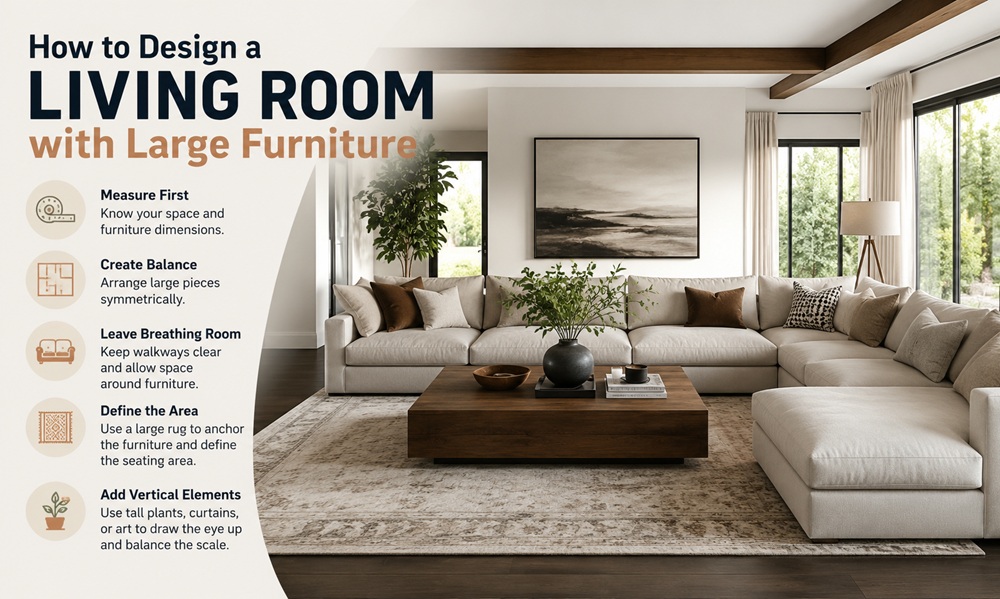
The key to designing a living room with large furniture is leaving enough breathing room around each piece, not shrinking the furniture itself. Aim for at least 30 inches of walking space around major pieces and 14 to 18 inches between a sofa and coffee table. Anchoring the room with one large statement piece, rather than several competing ones, keeps the space feeling intentional instead of cluttered. Scale matters more than size alone: a large sofa can work in a modest room if everything else is proportioned to support it.
Quick Checklist Before You Arrange Anything
- Measure the room’s total square footage and doorway locations first
- Identify one focal point, such as a fireplace, TV wall, or window
- Leave 30+ inches of walkway space around large pieces
- Keep at least 14 to 18 inches between seating and the coffee table
- Choose one large anchor piece rather than multiple oversized items
Detailed Guide: Arranging Large Furniture by Room Shape
Rectangular rooms handle large furniture well when pieces run parallel to the longest wall, creating a clear sightline from the entrance. In square rooms, angling a large sectional toward a corner can open up floor space that would otherwise feel boxed in. Narrow rooms benefit from floating furniture away from the walls, which counterintuitively makes the space feel larger by breaking up the long, empty stretch of floor.
How Do You Fit a Large Sofa in a Small Living Room?
Choose a sofa with visible legs rather than a skirted base, since the exposed floor space underneath reads as open rather than solid. Position it against the longest wall, and avoid placing another large piece directly across from it. A single well-scaled rug under the front legs of all seating ties the arrangement together without adding visual weight.
Can You Mix Large and Small Furniture in the Same Room?
Yes, and it often works better than uniform sizing. Pair one large anchor piece, like a sectional, with smaller supporting pieces such as a slim side table or petite accent chair. The contrast in scale creates visual interest and prevents the room from feeling monotonous or oversized.
Should You Push Large Furniture Against the Walls?
Not always. Floating a large sofa or sectional a few inches from the wall, with a console table behind it, creates a defined seating zone and improves traffic flow. This works especially well in open-concept layouts where the living room connects directly to a dining or kitchen space.
Tips to Visually Lighten Large Furniture
- Choose lighter upholstery colors to prevent the piece from dominating the room
- Add a low-profile coffee table instead of a bulky one
- Use a large-scale rug so furniture doesn’t look like it’s floating on a small mat
- Layer in slim, leggy accent furniture to balance visual weight
- Keep window treatments simple so the eye isn’t pulled in too many directions
Lighting also plays a bigger role than most people expect. A floor lamp placed beside a large chair or sofa breaks up its bulk and adds height to the room, drawing the eye upward instead of settling on the furniture’s footprint.
Frequently Asked Questions
How Much Space Should Be Left Around Living Room Furniture?
Leave at least 30 inches for main walkways and 14 to 18 inches between seating and a coffee table. These margins keep the room functional and prevent large furniture from feeling like an obstacle course.
What Furniture Should You Avoid in a Small Living Room?
Avoid multiple oversized pieces competing for attention, bulky skirted sofas that block floor visibility, and coffee tables with thick, heavy bases. One well-chosen large piece paired with lighter supporting furniture almost always looks better than several large items crowded together.