
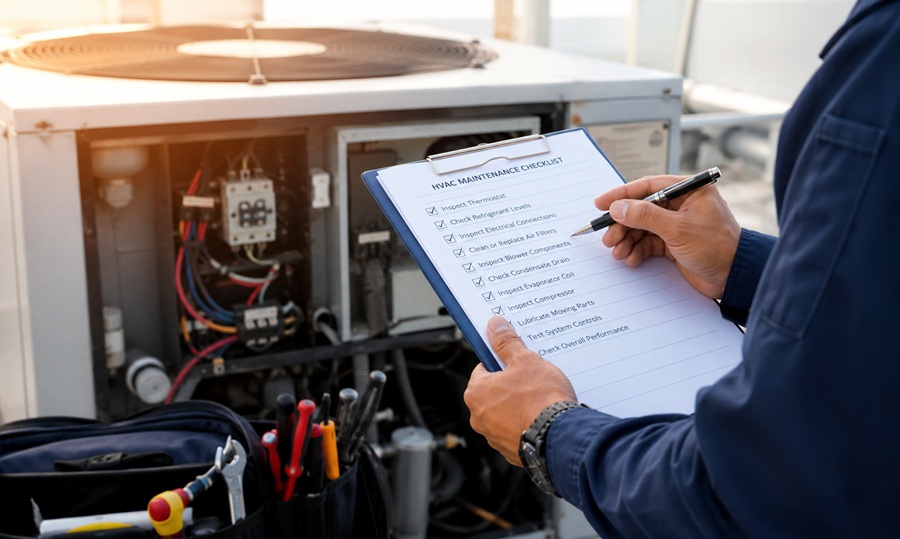
HVAC preventive maintenance means scheduling a professional tune-up twice a year — once before cooling season and once before heating season — while handling monthly filter checks, vent cleaning, and outdoor unit clearance yourself in between. This routine catches small issues, like a failing capacitor or a clogged condensate line, before they turn into full system breakdowns.
Most HVAC systems are replaced years earlier than necessary simply because small problems go unnoticed until they cause bigger failures. A consistent maintenance schedule is the single biggest factor in getting a full 15 to 20 year lifespan out of your system.
HVAC Preventive Maintenance Checklist
Monthly: check and replace air filters as needed, listen for unusual noises, and confirm the thermostat is responding correctly. Seasonally: clear debris from around the outdoor condenser unit, check for ice buildup on refrigerant lines, and inspect visible ductwork for gaps or disconnections. Annually: schedule a professional tune-up before summer for the AC system and before winter for the furnace, and have the technician check refrigerant levels, electrical connections, and the condensate drain.
Keep a simple log of filter changes and service dates, since this record can also support warranty claims if something fails prematurely.
It’s also worth checking your outdoor unit after major storms, since debris, hail, or fallen branches can bend the delicate fins on the condenser coil, restricting airflow even if the unit still appears to be running normally. Bent fins can often be gently straightened with a fin comb, though significant damage should be evaluated by a technician.
DIY Tasks vs. Professional Tasks
Homeowners can safely handle filter replacement (every 1 to 3 months depending on filter type and household factors like pets), keeping the outdoor unit clear of leaves, grass clippings, and debris within a two-foot radius, cleaning visible vents and registers, and checking that the thermostat batteries are fresh.
Leave refrigerant checks, electrical component testing, and internal cleaning of the blower motor or coils to a licensed technician. These tasks require specialized tools and, in the case of refrigerant, certification to handle safely and legally.
A professional tune-up typically includes checking refrigerant charge, testing electrical connections and capacitors, cleaning the condenser and evaporator coils, inspecting the condensate drain for clogs, and verifying the thermostat calibration.
Some homeowners also choose to clean the condensate drain line themselves using a wet/dry vacuum at the outdoor termination point, which is a relatively low-risk task that helps prevent the common springtime issue of a clogged line triggering a safety shutoff on the air handler. If you’re not comfortable locating or accessing this line, it’s a quick, inexpensive task for a technician to handle during a routine visit.
How Often Should HVAC Systems Be Serviced?
Twice a year is the standard recommendation — once in spring for the air conditioning system and once in fall for the furnace or heat pump. Systems in extreme climates or used heavily year-round may benefit from more frequent filter checks even if professional service stays at twice yearly.
How Much Does an HVAC Maintenance Plan Cost?
A single tune-up visit typically runs $75 to $200, while annual maintenance plans covering two visits per year often cost $150 to $300 total, sometimes bundled with discounts on repairs and priority scheduling during peak season.
Why Preventive Maintenance Saves Money
A dirty filter or low refrigerant charge forces the system to run longer to reach the same temperature, increasing energy bills by 10 to 25 percent in some cases. Regular maintenance keeps the system running at its intended efficiency, which shows up directly in lower utility costs.
Preventive maintenance also catches failing components — like a weakening capacitor or a corroding electrical connection — while they’re inexpensive to replace, rather than after they cause a complete system failure that requires emergency repair, often at a higher rate and less convenient timing.
Many manufacturers also require documented annual maintenance to keep equipment warranties valid, so skipping service visits can leave you covering the full cost of a major component failure even if the system is still within its original warranty period.
Tips for Extending HVAC System Lifespan
Keep at least two feet of clearance around outdoor units, and trim back plants or shrubs that could restrict airflow. Change filters on schedule even if they don’t look visibly dirty, since some particles are too fine to see but still restrict airflow.
Have ductwork inspected every few years for leaks, which force the system to work harder to deliver the same amount of conditioned air. Consider a programmable or smart thermostat, which reduces unnecessary run time and wear on the system compared to constant manual adjustments.
Avoid closing too many supply vents in an attempt to redirect airflow to specific rooms, since this can increase static pressure in the ductwork and put unnecessary strain on the blower motor. If certain rooms consistently run hotter or colder than the rest of the house, that’s usually a sign of a duct balancing issue worth having a technician assess rather than something to fix by closing vents.
Frequently Asked Questions
What happens if I skip HVAC maintenance?
Skipping maintenance typically leads to reduced efficiency, higher energy bills, and a greater risk of mid-season breakdowns, often at the least convenient time and highest repair cost.
Can I do all HVAC maintenance myself?
No — while filter changes and basic cleaning are safe for homeowners, refrigerant handling and internal electrical work require a licensed technician both for safety and, in many areas, legal compliance.
How do I know if my HVAC filter needs replacing?
Hold it up to a light source; if you can’t see light passing through clearly, it’s time to replace it. Most standard filters need changing every 60 to 90 days, though homes with pets or allergies may need monthly changes.
Is it normal for an HVAC system to make noise?
A quiet hum during operation is normal, but grinding, squealing, or banging noises usually indicate a mechanical issue, such as a failing motor bearing or loose component, that should be evaluated by a technician promptly.