
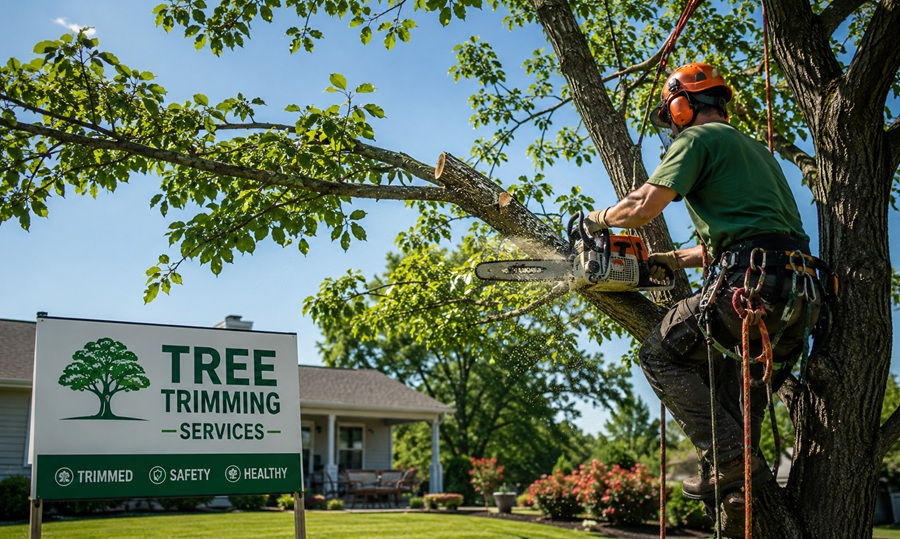
Professional tree trimming typically costs $200 to $1,000 per tree depending on height and complexity, and most trees do best trimmed during their dormant season — late winter for most deciduous species. A certified arborist can assess whether a tree needs light maintenance pruning or a more involved structural trim.
What Tree Trimming Services Actually Include
A standard tree trimming service typically includes removing dead or damaged branches, thinning dense growth to improve airflow and light penetration, and shaping the canopy away from structures, power lines, or walkways. Many companies also offer a free or low-cost initial assessment to identify disease, pest damage, or structural risk before recommending a service level.
How Much Does Tree Trimming Cost?
Cost depends mainly on tree height, accessibility, and how much work is needed. Small trees under 30 feet often run $150 to $450, medium trees between 30 and 60 feet run $300 to $700, and large or hard-to-access trees over 60 feet can run $700 to $1,500 or more, especially if power lines or nearby structures complicate the job.
DIY vs. Hiring a Professional
| Factor | DIY | Professional Service |
| Tree height | Best for under 15 feet | Any height, including large mature trees |
| Cost | Tools only, $50–$150 | $150–$1,500+ depending on size |
| Safety | Higher risk without training | Trained, insured, equipped for height work |
| Near power lines | Not recommended | Required — utility coordination often needed |
Small ornamental trees and shrubs within easy reach of the ground are reasonable DIY projects with basic pruning shears and a pole saw. Anything requiring a ladder, chainsaw work at height, or proximity to power lines is where professional service stops being optional and starts being a safety requirement.
Tree Trimming vs. Tree Removal
Trimming addresses specific branches while keeping the tree intact and healthy, while removal takes the entire tree down, usually because of severe disease, structural instability, or death. A good tree service will recommend trimming whenever it’s a viable option, since removal is more expensive and permanent.
When Is the Best Time of Year to Trim Trees?
Most deciduous trees are best trimmed in late winter while they’re dormant, since this timing reduces stress on the tree and makes the branch structure easier to see without leaves in the way. Flowering trees are often the exception — many are best pruned right after they finish blooming, so timing depends somewhat on the specific species.
Can You Trim Trees in the Summer?
Light trimming is generally fine in summer, but heavy pruning is best avoided since it removes leaves the tree needs for energy production during its most active growth period. Dead or hazardous branches, however, should be removed whenever they’re spotted, regardless of season.
Certified Arborist vs. General Tree Service
A certified arborist has passed exams demonstrating knowledge of tree biology, disease identification, and proper pruning techniques, which matters most for valuable, mature, or potentially diseased trees. General tree services can handle routine trimming well, but for anything involving tree health diagnosis or high-value trees, an arborist’s assessment is worth the extra step.
Expert Advice: Red Flags When Hiring
- No proof of insurance or liability coverage — a major risk if a branch damages property
- Quotes given without seeing the tree in person
- Recommends ‘topping’ large branches, an outdated practice that damages long-term tree health
- Pressure to sign same-day without time to compare quotes
- No mention of debris removal or cleanup in the estimate
Seasonal Tree Trimming Considerations
In regions with harsh winters, late winter trimming also reduces the chance of storm damage from ice or snow accumulating on overgrown branches. In warmer climates without a true dormant season, trimming schedules are often based more on growth rate and species than strict seasonal timing.
Frequently Asked Questions
How Often Should Trees Be Professionally Trimmed?
Most established trees benefit from professional trimming every 3 to 5 years for general maintenance, though younger trees may need more frequent shaping in their first several years to establish good structure.
Does Tree Trimming Increase Property Value?
Well-maintained trees can contribute to curb appeal and, in some cases, property value, particularly mature trees that provide shade or privacy. Neglected, overgrown, or hazardous trees can have the opposite effect and may even be flagged during a home inspection or appraisal.
Getting Quotes: What to Ask For
When requesting quotes, ask for a written estimate that specifies exactly which branches or areas will be trimmed, whether debris removal is included, and proof of both liability insurance and workers’ compensation coverage. Comparing at least two or three quotes helps identify whether a price is reasonable for the local market and the specific job.
Preparing Your Property Before the Crew Arrives
Clearing the area around the tree — moving vehicles, outdoor furniture, and any fragile items within falling range of branches — helps the job go smoothly and reduces the risk of accidental damage. It’s also worth confirming access points in advance, especially if equipment needs to pass through a gate or narrow side yard.
Understanding Utility Line Restrictions
Branches growing near power lines typically fall under utility company jurisdiction rather than a homeowner’s private tree service, and many utilities offer free trimming for growth that threatens their lines. Attempting to trim near power lines without proper training and equipment is genuinely dangerous and best left entirely to professionals coordinated with the utility company.
Permits and Local Regulations
Some cities and neighborhoods, particularly those with protected or heritage tree ordinances, require a permit before trimming or removing certain trees, especially larger or older ones. Checking with the local municipality before scheduling major trimming work avoids potential fines and is worth a quick phone call, especially for older or particularly large trees on the property.