
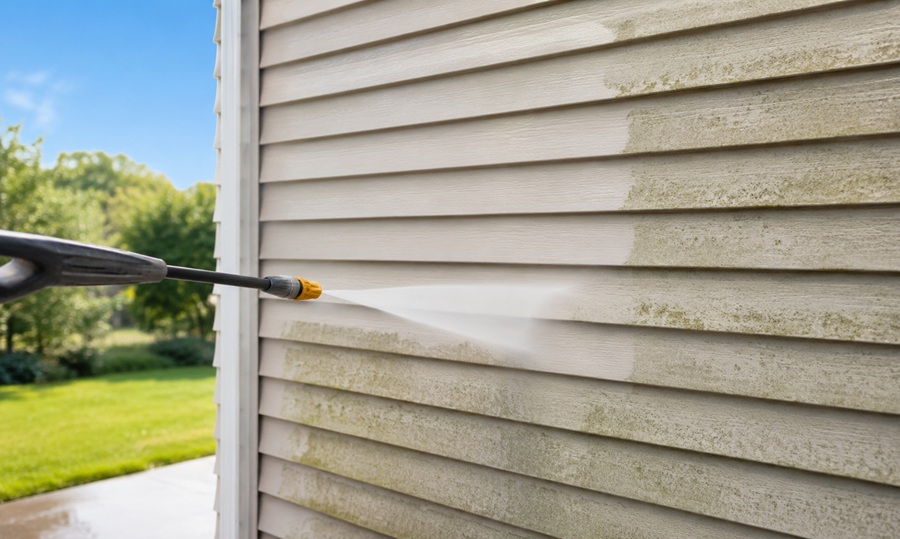
Vinyl and fiber cement siding should be pressure washed at 1,300 to 1,600 PSI using a wide fan tip, held at least 12 inches from the surface, and sprayed at a downward or level angle rather than straight up under seams. Going higher than 1,600 PSI risks forcing water behind panels or stripping paint, which is why many pros use a soft-wash approach with lower pressure and a cleaning solution instead.
Homeowners ask a handful of the same questions before tackling this job themselves, so here’s what you need to know before you start, along with real examples of what goes wrong when the wrong settings are used.
What Is the Right PSI for Pressure Washing Siding?
For vinyl siding, stick to 1,300 to 1,600 PSI. For fiber cement or engineered wood siding, 1,500 to 2,000 PSI with a wider fan tip is generally safe. Painted wood siding is the most delicate and should stay under 1,200 PSI to avoid stripping paint or gouging soft wood grain.
Example: a homeowner using a rented gas pressure washer rated at 3,000 PSI without adjusting the nozzle sprayed a narrow, concentrated stream directly at vinyl siding from six inches away. The result was cracked panels along a 10-foot section, which needed full replacement rather than a simple clean.
Electric pressure washers are often easier for homeowners to control safely for siding work, since most residential electric models top out around 1,900 to 2,300 PSI, closer to the safe range for exterior cleaning. Gas-powered units, while more powerful, are typically better suited for driveways and concrete than delicate siding materials unless the operator is experienced with adjusting pressure and nozzle angle carefully.
How Do You Pressure Wash Siding Step-by-Step?
Start by closing all windows and doors, and cover outdoor outlets and light fixtures with plastic bags. Rinse the siding first with a low-pressure setting to remove loose dirt and cobwebs. Apply a siding-safe cleaning solution — typically a mix of water, mild detergent, and a small amount of bleach for mildew — using a low-pressure soap nozzle, and let it sit for 5 to 10 minutes without drying.
Working top to bottom, rinse each section with the wide fan tip at a slight downward angle, keeping the nozzle moving continuously rather than holding it in one spot. Overlap each pass slightly to avoid streaking. Finish by rinsing windows, doors, and any plants that may have gotten cleaning solution on them.
Example: a homeowner working bottom-to-top instead of top-to-bottom ended up pushing dirty runoff back over freshly cleaned sections, requiring a second full pass to fix streaking.
Test the cleaning solution and pressure setting on a small, inconspicuous section of siding first, such as a corner near the foundation, before treating the entire house. This catches any unexpected reaction between the cleaning solution and the siding’s finish before it affects a highly visible area.
Can You Damage Siding With a Pressure Washer?
Yes. The most common damage is water intrusion behind panels when spraying upward at seams, which can lead to mold growth inside wall cavities. Cracked or dented vinyl panels happen when pressure is too high or the nozzle is held too close. Stripped paint on wood siding is another frequent issue when pressure exceeds what the paint finish can handle.
Example: a homeowner sprayed directly up under horizontal seams to remove stubborn dirt, unknowingly pushing water behind the siding. Weeks later, a musty smell led to discovering mold growth on the sheathing behind the panels, requiring the siding to be removed for repairs.
Soft Washing vs. Pressure Washing: Which Should You Use?
Soft washing uses low pressure (under 500 PSI) combined with a cleaning solution to break down algae, mildew, and grime, then rinses it away rather than blasting it off. It’s gentler on siding and better suited for removing biological growth like mold or algae streaking. Pressure washing uses higher force to physically remove dirt and buildup and works faster on general grime, but carries more risk of damage.
For siding with visible black streaking (usually algae) or green tinge (mold or moss), soft washing is typically the better choice. For siding that’s just dusty or dirty from pollen and debris, standard pressure washing at the appropriate PSI works fine.
Some homeowners combine both methods — a soft wash with cleaning solution to break down biological growth, followed by a light low-pressure rinse to remove the loosened residue — which tends to produce the cleanest overall result while minimizing risk to the siding material.
When Should You Hire a Professional Pressure Washing Service?
Consider hiring a pro for two-story or taller homes where ladder work is required, siding with existing damage or loose panels, or heavy mold and algae growth that needs commercial-grade cleaning solution. Professional pressure washing for an average-sized house typically costs $200 to $450, depending on square footage and the level of buildup.
Example: a homeowner with a three-story home attempted to pressure wash the upper level from an extension ladder and found the recoil from the wand made it difficult to maintain balance safely, ultimately calling a professional to finish the job.
Professional crews typically carry extension wands and telescoping poles that reach second- and third-story siding safely from the ground, which is one of the main reasons hiring out taller homes tends to be worth the cost even for otherwise confident DIYers.
Frequently Asked Questions
How often should siding be pressure washed?
Most homes benefit from pressure washing once a year, or every six months in humid climates prone to mold and algae growth.
What cleaning solution is safe for siding?
A mix of water, a small amount of dish soap or specialty siding cleaner, and diluted bleach (roughly one part bleach to four parts water) handles most dirt, mildew, and algae without damaging vinyl or fiber cement.
Can pressure washing remove paint from siding?
Yes, especially on wood siding with high pressure or a narrow nozzle tip. If you plan to repaint anyway, this can actually help remove peeling paint before a fresh coat.
Is it safe to pressure wash siding in cold weather?
It’s best avoided when temperatures are near or below freezing, since water can seep into small cracks or seams and freeze, potentially causing damage. Most siding manufacturers recommend cleaning when temperatures are consistently above 40 degrees Fahrenheit.