
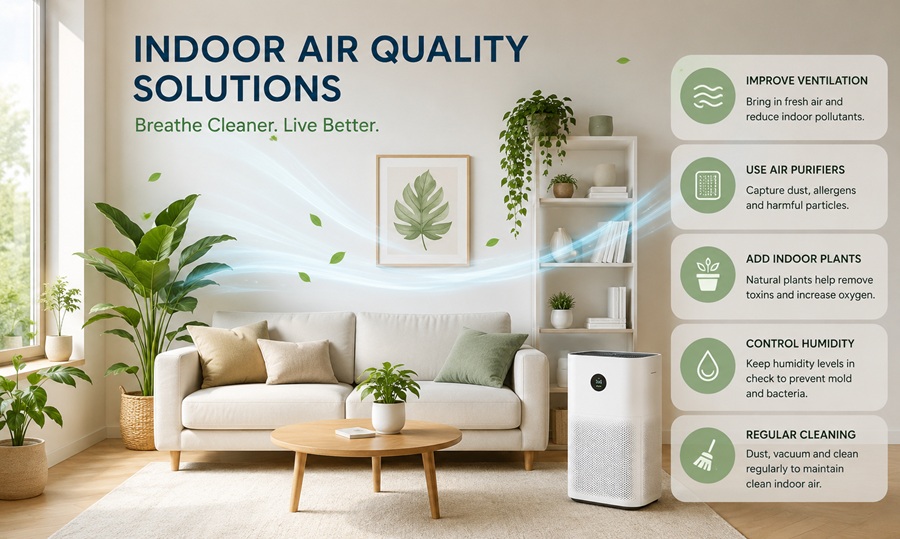
The fastest way to improve indoor air quality is a combination of source control, ventilation, and filtration — in that order. Removing pollutants at the source (like switching cleaning products or fixing a moisture problem) matters more than any device, but a good air purifier and regular HVAC filter changes handle what source control can’t.
Understanding Indoor Air Quality Standards
The EPA tracks common indoor air pollutants, including particulate matter, volatile organic compounds (VOCs) from products like paint and cleaning supplies, and biological contaminants like mold and dust mites. Indoor air is often more polluted than outdoor air because pollutants get trapped inside without adequate ventilation, especially in newer, tightly sealed homes built for energy efficiency.
Comparing Indoor Air Quality Solutions
| Solution | Best For | Approximate Cost |
| Air purifier (HEPA) | Allergens, dust, pet dander in a single room | $100–$400 |
| Whole-home HVAC filtration | Whole-house particulate reduction | $50–$300 for upgraded filters |
| Ventilation improvements | VOCs, cooking fumes, general staleness | $0–$1,000+ |
| Humidity control (dehumidifier/humidifier) | Mold prevention, dust mite reduction | $150–$400 |
| Air quality monitor | Tracking and identifying problem areas | $50–$250 |
Do Air Purifiers Really Work?
Yes, for what they’re designed to do — HEPA air purifiers are effective at capturing airborne particles like dust, pollen, pet dander, and some mold spores in the room they’re placed in. They’re less effective against gases and odors unless paired with an activated carbon filter, and they only treat the air in the room they’re operating in, not the whole house.
Ventilation: The Overlooked Solution
Many homes, especially newer or recently renovated ones, are sealed tightly enough to trap pollutants indoors with nowhere to go. Simple habits — running exhaust fans while cooking or showering, cracking windows when weather allows, and making sure bathroom fans vent outside rather than into the attic — do more for air quality than most people expect, and cost nothing.
How Do You Improve Air Quality Fastest?
Open windows for cross-ventilation when outdoor air quality is good, run exhaust fans during cooking and showering, and change HVAC filters on schedule. These three habits produce a noticeable difference within days, while structural fixes like duct sealing take longer to show results.
Humidity’s Role in Air Quality
Indoor humidity above 60% creates conditions for mold and dust mites, while humidity below 30% can irritate airways and dry out mucous membranes. The ideal range for most homes sits between 30% and 50%. A hygrometer, which costs under $15, is the easiest way to actually know where your home falls rather than guessing.
HVAC Filtration and Duct Maintenance
Upgrading to a higher MERV-rated filter (typically MERV 8 to MERV 13 for residential systems) captures smaller particles than a basic filter, but check your system’s specifications first — some older HVAC units aren’t built to handle the airflow restriction of very high MERV ratings. Duct cleaning is worth considering if there’s visible mold, pest infestation, or after major renovation work, but it’s not typically needed on a routine schedule for most homes.
Expert Advice: Where to Start
Start with source control before spending on equipment. Identify obvious pollutant sources — a gas stove without proper ventilation, off-gassing new furniture, or a damp basement — and address those first. Only after that does it make sense to layer in a purifier or upgraded filtration, since no device fully compensates for an ongoing source problem.
- Fix moisture or mold sources before adding air quality devices
- Switch to low-VOC paints and cleaning products where possible
- Change HVAC filters every 60–90 days, or monthly with pets
- Use an air quality monitor to identify specific problem rooms
- Add a purifier to bedrooms first, since that’s where you spend the most hours
Frequently Asked Questions
What Improves Indoor Air Quality Fastest?
Increasing ventilation — opening windows and running exhaust fans — produces the quickest noticeable change, often within hours. Longer-term improvements come from consistent filter changes, humidity control, and addressing pollutant sources directly.
Are Air Quality Monitors Worth Buying?
For most households, yes, especially budget models under $100 that track particulate matter and humidity. They help identify which rooms or activities (like cooking or new furniture) actually affect air quality, which makes it easier to target solutions instead of guessing.
Seasonal Air Quality Considerations
Indoor air quality tends to worsen in winter, when homes stay sealed for heating efficiency and windows rarely open. Summer wildfire smoke in some regions can also push outdoor pollutants indoors, making it worth checking local air quality reports before deciding whether to ventilate or rely on filtration alone during those periods.
Air Quality and Allergies
For households managing seasonal allergies, keeping windows closed during high-pollen periods and relying more heavily on HEPA filtration can noticeably reduce symptoms. Washing bedding weekly in hot water and vacuuming with a HEPA-filter vacuum also cuts down on the dust mites and allergens that settle in fabric surfaces throughout the home.
When to Call a Professional
Persistent musty odors, visible mold growth, or unexplained respiratory symptoms among household members are signs it’s worth bringing in a professional for an indoor air quality assessment. A professional can test for specific pollutants that consumer monitors don’t detect, like certain mold spore types or elevated radon levels.
Houseplants and Air Quality
While houseplants are often marketed as natural air purifiers, their actual impact on indoor air quality in a typical home is modest compared to mechanical filtration and ventilation. They’re a nice addition to a home for other reasons, but relying on plants alone to solve an air quality problem generally isn’t enough for households with real allergen or pollutant concerns.