
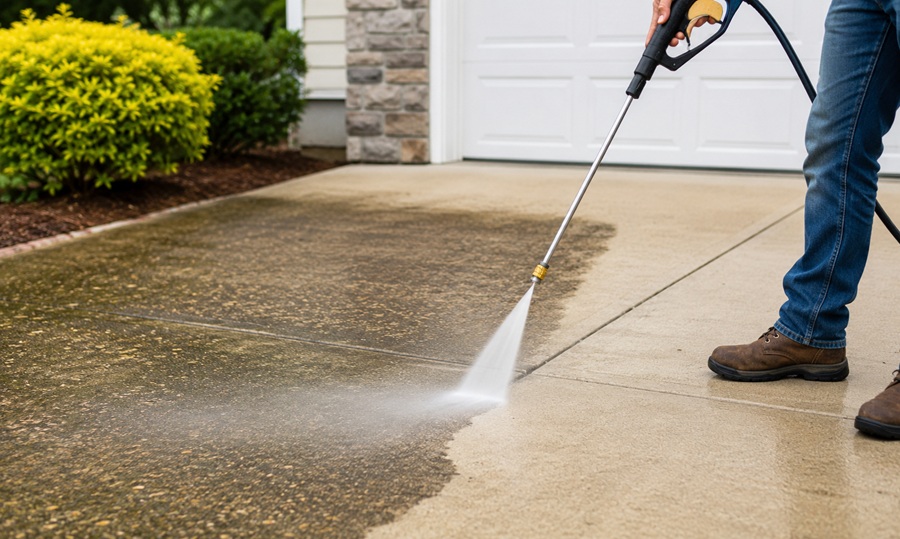
Pressure washing a driveway involves clearing debris, applying a cleaning solution, working the surface with a rotating surface cleaner or wide-fan nozzle at 2,500 to 3,000 PSI, then rinsing from top to bottom. The right PSI and nozzle depend on whether your driveway is concrete or asphalt, since asphalt scars more easily under high pressure. This guide covers the full process along with common mistakes to avoid.
What PSI Should You Use for a Driveway?
Concrete driveways can typically handle 3,000 to 3,500 PSI without damage, while asphalt should stay closer to 2,000 to 2,500 PSI to avoid stripping the surface or loosening aggregate. If you’re unsure which material you have, start on the lower end and test a small, hidden section before washing the full driveway. Too much pressure can etch lines into concrete or pit asphalt, so it’s always safer to start low and increase gradually than to start too aggressive.
Tools You’ll Need
- Gas or electric pressure washer (2,000–3,500 PSI)
- Surface cleaner attachment (recommended for even results) or a 25-degree fan tip nozzle
- Driveway-safe degreaser or cleaning solution
- Stiff-bristle push broom
- Safety glasses and closed-toe shoes
A surface cleaner attachment, which spins two jets beneath a circular housing, produces far more even results than a handheld wand and is worth renting if you don’t already own one, especially for driveways larger than a two-car garage.
How to Pressure Wash a Driveway in 6 Steps
- Clear the surface. Sweep away loose debris, leaves, and dirt so the pressure washer isn’t fighting through loose material. Move vehicles, planters, and anything else off the driveway.
- Pre-treat stains. Apply a driveway-safe degreaser to oil stains, rust marks, or tire tracks and let it sit for 10 to 15 minutes. This softens stains so the pressure washer can lift them rather than just pushing dirty water around.
- Set up your pressure washer. Attach the appropriate nozzle or surface cleaner, connect the water supply, and confirm the PSI setting matches your driveway material.
- Wash in overlapping passes. Work in straight, overlapping rows, keeping the nozzle roughly 12 inches from the surface for a fan tip, or let a surface cleaner glide naturally across the concrete. Move at a steady pace rather than lingering in one spot, which can etch the surface.
- Rinse thoroughly. Once you’ve covered the full driveway, do a final rinse pass to clear away loosened dirt and cleaning solution residue.
- Let it dry and inspect. Allow the driveway to dry completely, typically 24 hours, before parking vehicles back on it or applying a sealer.
Removing Oil Stains and Rust From a Driveway
Oil stains respond best to a degreaser formulated specifically for concrete or asphalt, applied and left to sit before washing. For stubborn, set-in stains, a baking soda paste applied first and left overnight can help lift oil before you bring out the pressure washer. Rust stains, often from lawn furniture or sprinkler heads, usually need a rust-specific cleaner since standard degreasers won’t fully remove the discoloration.
Should You Seal Your Driveway After Pressure Washing?
Sealing after pressure washing is one of the most effective ways to protect the surface and make future cleaning easier. A fresh seal fills small cracks, blocks moisture from penetrating the concrete or asphalt, and gives stains less opportunity to set in deeply. Wait until the driveway is completely dry, usually 24 to 48 hours after washing, before applying sealer, since trapped moisture underneath can cause the seal to fail.
Common Pressure Washing Mistakes
Holding the nozzle too close to the surface is the most common mistake, and it’s what causes visible lines or etching, especially on softer asphalt. Using too high a PSI setting for your specific driveway material is the second major issue. Skipping the pre-treatment step on stains often leads to disappointing results even after a full wash, since pressure alone doesn’t always break down oil and grease. Finally, washing in a random pattern instead of overlapping rows tends to leave streaky, uneven results that are obvious once the driveway dries.
Hiring a Professional vs. DIY
DIY pressure washing makes sense for driveways in reasonably good condition without deep, set-in stains, and it typically costs under $50 in rental fees and cleaning solution. Professional driveway cleaning runs $150 to $350 for an average two-car driveway but includes commercial-grade equipment, hot water options for tough grease, and experience judging the right pressure for your specific surface. If your driveway has extensive staining, cracks, or you’re unsure about pressure settings, a professional service reduces the risk of accidentally damaging the surface.
Best Time of Year to Pressure Wash a Driveway
Spring is generally the ideal time to pressure wash a driveway in most parts of the country, since it clears away winter salt residue, sand, and grime before the summer months, when stains from grilling, gardening, and increased outdoor activity tend to build up. Fall washing is also common, particularly to clear leaves and organic debris before it has a chance to stain the surface over winter.
Temperature matters too. Washing on a day with moderate temperatures, avoiding both freezing conditions and extreme heat, gives cleaning solutions time to work properly without evaporating too quickly or freezing on the surface. Avoid pressure washing when temperatures are expected to drop below freezing shortly after, since water that seeps into small cracks can expand as it freezes and worsen existing damage.
Environmental Considerations When Pressure Washing
Driveway cleaning solutions and the runoff from pressure washing can affect nearby soil, plants, and storm drains, so it’s worth choosing an environmentally friendly degreaser when possible, particularly if your driveway slopes toward a garden bed or storm drain. Covering nearby plants with a tarp during the cleaning process protects them from any chemical runoff. Many municipalities also have guidelines about where wastewater from driveway cleaning can drain, especially in areas with strict stormwater regulations, so it’s worth a quick check with your local water authority if you’re washing a large commercial or multi-unit driveway.
Frequently Asked Questions
Can pressure washing damage a driveway?
Yes, using too high a PSI or holding the nozzle too close can etch concrete or strip asphalt, which is why matching pressure to your driveway material matters.
How often should you pressure wash a driveway?
Most driveways benefit from a thorough pressure wash once or twice a year, though homes with heavy tree cover or frequent oil drips may need more frequent cleaning.
What’s the best cleaner for driveway oil stains?
A concrete- or asphalt-safe degreaser applied before pressure washing works best, with a baking soda paste as a backup for older, set-in stains.
Is it better to pressure wash concrete or asphalt at a lower PSI?
Asphalt is softer and more prone to damage, so it should generally be washed at a lower PSI than concrete to avoid pitting or stripping the surface.