
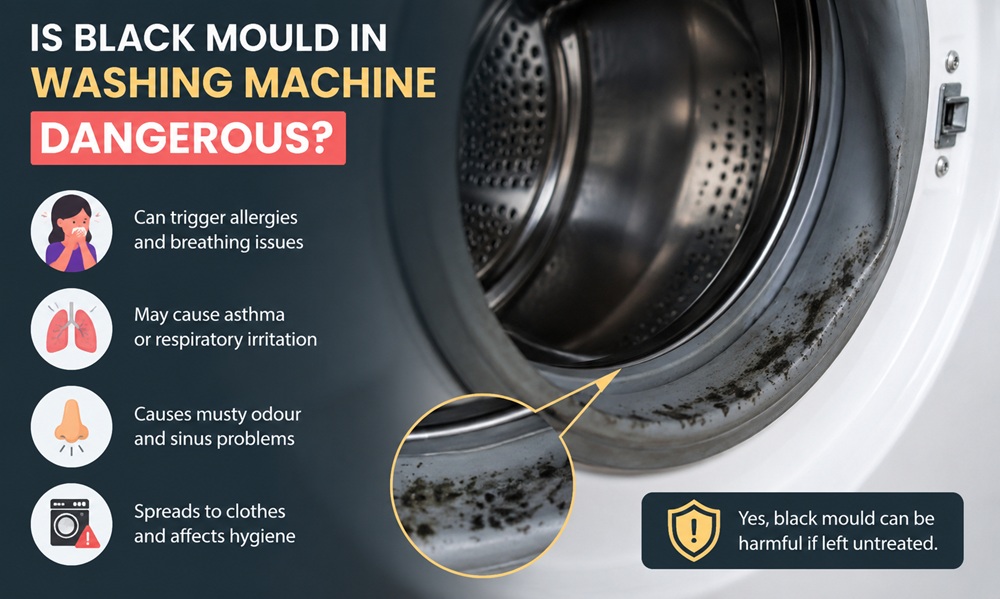
Black mold in a washing machine can be dangerous for people with mold allergies, asthma, or weakened immune systems, causing symptoms like coughing, skin irritation, or respiratory discomfort. For most healthy people, occasional exposure isn’t an emergency, but it should still be cleaned promptly since mold spreads quickly in the damp, dark environment of a washer and can affect clothing hygiene and indoor air quality over time.
Finding black gunk around your washer’s door gasket or detergent tray is more common than most people realize, especially with front-load machines. Here’s what’s actually going on and what to do about it.
Myth vs Reality on Washing Machine Mold
The myth is that any dark residue in a washer is automatically toxic black mold requiring emergency measures. The reality is that most washing machine mold is a mix of mildew, bacteria, and mold species growing in leftover moisture and detergent residue, and while it should be taken seriously, it’s rarely the same as the toxic Stachybotrys chartarum mold associated with severe home mold problems, which needs specific damp conditions less common inside a washer that regularly runs hot cycles.
Facts on Health Risks and Exposure
People with mold allergies or asthma are the most likely to notice symptoms from washing machine mold, including sneezing, coughing, throat irritation, or skin reactions when wearing clothes washed in a moldy machine. For most healthy adults, brief exposure to washer mold isn’t typically a serious health concern, but repeated exposure over months without cleaning the machine can still contribute to unpleasant odors and, in sensitive individuals, ongoing respiratory irritation.
Immunocompromised individuals, young children, and older adults may be more sensitive to mold exposure generally, so cleaning a moldy washer sooner rather than later is a reasonable precaution for any household, not just those with known allergies.
Why Mold Grows in Washing Machines
Front-load washers are more prone to mold than top-load machines because their rubber door gaskets trap moisture and don’t dry out as quickly between cycles. Using too much detergent, especially non-HE detergent in an HE machine, leaves residue that mold and bacteria feed on. Washing exclusively in cold water and always closing the door immediately after a cycle both contribute to trapped moisture that encourages mold growth.
Can You Get Sick from Washing Machine Mold?
It’s uncommon for washing machine mold to cause serious illness in healthy people, but it can trigger allergy-like symptoms or skin irritation, particularly in people already sensitive to mold. If you notice unexplained skin irritation, a musty smell on clean laundry, or worsening allergy symptoms and you haven’t cleaned your washer recently, it’s worth checking the gasket and detergent tray for buildup.
How to Remove Mold from Your Washer
Start by wiping down the rubber door gasket with a mixture of equal parts water and white vinegar, or a diluted bleach solution if the mold is heavy, making sure to check the folds where mold tends to hide. Run an empty hot cycle with two cups of white vinegar or a washing machine cleaning tablet to clean the drum and internal components. Remove and clean the detergent dispenser tray separately, since it often collects residue that regular cycles don’t reach.
Should You Replace a Moldy Washer?
In most cases, no. Regular cleaning resolves washing machine mold without needing to replace the appliance. Replacement becomes worth considering only if the machine has an internal leak causing persistent moisture buildup that cleaning can’t address, or if the mold has caused damage to internal components that affects performance.
Preventing Mold From Coming Back
Leave the washer door open between loads to let the drum air out and dry completely, rather than closing it immediately after removing laundry. Wipe down the door gasket weekly with a dry cloth to remove excess moisture. Use the recommended amount of HE detergent, since excess detergent is one of the most common contributors to mold buildup in modern washers.
Running a monthly maintenance cycle with a washing machine cleaner or a vinegar and hot water combination helps prevent buildup before it becomes visible mold. Many newer washers include a dedicated “clean” or “tub clean” cycle designed specifically for this purpose, worth using on a regular schedule rather than only after mold appears.
Top-Load vs Front-Load Mold Risk
Top-load washers with traditional agitators are generally less prone to mold than front-load machines, largely because they don’t have a rubber door gasket that traps standing water the way front-load door seals do. That said, top-load high-efficiency machines with a lower water fill can still develop mold in detergent trays and around the drum if not cleaned periodically. Front-load owners specifically should make gasket cleaning part of a regular routine, since this is by far the most common spot for mold to develop in these machines.
Signs Your Washer Needs Attention Now
A persistent musty smell that lingers on clean clothes, even right after a wash cycle, is one of the clearest signs that mold or mildew has built up somewhere in the machine. Visible black or dark green spots in the door gasket folds, detergent tray, or drum interior are another obvious signal. If you notice either of these signs, addressing it within the next cleaning cycle or two prevents the buildup from becoming more extensive and harder to fully remove.
A Quick Weekly Habit Worth Building
Wiping the door gasket dry after the last load of the day and leaving the door cracked open overnight takes less than a minute but meaningfully reduces how often deeper cleaning is needed. This small habit, more than any single deep-cleaning session, tends to be the difference between a washer that stays mold-free and one that needs regular intervention.