
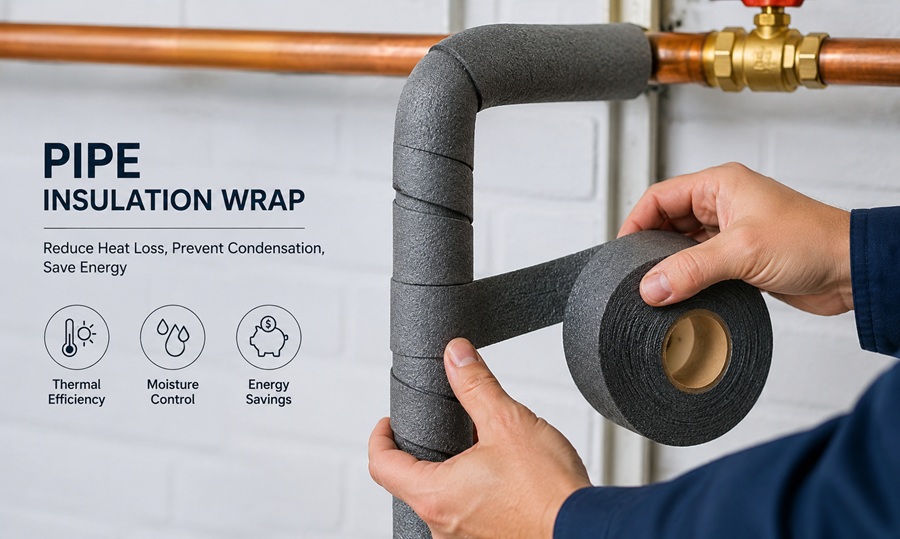
Pipe insulation wrap slows heat loss from hot water pipes and protects exposed cold-water pipes from freezing in winter. Foam sleeve insulation is the easiest type for DIY installation, costs roughly $1 to $3 per linear foot, and can be fitted around most standard pipe diameters in under an hour for a typical basement or crawl space.
The Beginner’s Guide to Pipe Insulation Types
Foam pipe sleeves are the most common choice for DIY projects. They come pre-slit down one side, so they snap directly onto the pipe without needing to be threaded from the end. Fiberglass wrap insulation offers a bit more thermal protection but requires more careful handling and protective gloves during installation.
Does Pipe Insulation Wrap Actually Work?
Yes, though it works differently depending on the goal. On hot water pipes, it reduces heat loss so water stays hotter longer and the water heater doesn’t have to work as hard to maintain temperature. On cold water pipes in unheated spaces, it slows the rate of heat loss enough to lower the risk of freezing, though it doesn’t eliminate the risk entirely in extreme cold.
Choosing the Right Material
| Material | Best For | Approx. Cost |
| Foam sleeve | Basements, crawl spaces, easy DIY jobs | $1–$3 per linear foot |
| Fiberglass wrap | Higher heat-loss reduction, hot water lines | $1.50–$4 per linear foot |
| Rubber/elastomeric wrap | Outdoor pipes, exposed to weather | $2–$5 per linear foot |
| Heat tape (supplemental) | Pipes at high freeze risk | $15–$40 per roll |
How Thick Should Pipe Insulation Be?
For most residential applications, 1/2-inch to 1-inch thick foam insulation is standard. Pipes in especially cold, uninsulated areas — like an unheated crawl space in a colder climate — may benefit from thicker insulation, closer to 1 inch, or a combination of insulation and heat tape for extra protection during severe cold snaps.
Common Mistakes When Installing Pipe Insulation
The most common mistake is leaving gaps at joints, elbows, and valves. Heat and cold transfer most easily at these connection points, so skipping them undermines the insulation on the straight sections. Pre-formed foam elbow pieces or extra tape at these junctions closes that gap.
Another frequent mistake is using indoor-rated foam insulation outdoors, where UV exposure and moisture break it down within a season or two. Outdoor and exposed pipes need weather-resistant wrap, not standard foam sleeves meant for interior use.
- Skipping joints, elbows, and valves — the weakest points for heat loss
- Using indoor foam insulation on outdoor or exposed pipes
- Leaving gaps or loose seams where sleeves meet
- Forgetting to insulate pipes running through unheated garages or attics
- Not securing the wrap with tape, letting it slide or separate over time
How to Insulate Pipes: Step by Step
- Measure the pipe’s diameter to buy the correctly sized foam sleeve
- Cut the foam sleeve to length using a utility knife, adding extra for elbow turns
- Snap the pre-slit foam onto the pipe along its length
- Seal the seam with foil tape or the manufacturer’s recommended tape
- Cover elbows and joints with pre-formed foam elbow pieces or extra wrap
- Secure loose ends with zip ties or tape to prevent slipping over time
Next Steps: Beyond Basic Insulation
Once the main exposed pipes are wrapped, check for other cold-prone spots — pipes near exterior walls, in unheated garages, or crossing through attic spaces. These are the pipes most likely to freeze during a hard cold snap, even when the rest of the home’s plumbing is fine.
Should You Insulate Pipes in a Basement That’s Already Heated?
For hot water pipes, yes — insulation reduces standby heat loss regardless of whether the basement itself is heated, which can lower water heating costs modestly over time. For cold water pipes in a heated basement, insulation is less urgent, though it still helps prevent condensation buildup on the pipe in humid conditions.
Frequently Asked Questions
How Much Does Pipe Insulation Cost for a Whole Basement?
For an average basement with 50 to 100 linear feet of exposed pipe, foam sleeve insulation typically runs $75 to $300 total for materials, depending on pipe diameter and material choice. Labor is minimal since most homeowners handle this themselves.
Can Pipe Insulation Wrap Prevent Frozen Pipes Completely?
Not entirely on its own. It significantly slows heat loss and reduces freeze risk, but during extended extreme cold, it works best combined with heat tape on the highest-risk sections and keeping a slow drip running through faucets connected to exposed pipes.
Signs Your Pipes Already Need Attention
Reduced water pressure during a cold snap, visible frost on an exposed pipe, or a section of pipe that feels noticeably colder than the surrounding air are all early warning signs. Catching these signs before a full freeze happens gives time to add insulation or a space heater in the affected area rather than dealing with a burst pipe later.
Insulating Outdoor Spigots and Hose Bibs
Outdoor faucets are among the most common sources of frozen and burst pipes in winter, since they’re directly exposed to outdoor temperatures. A foam faucet cover, which costs just a few dollars, slips over the spigot and provides a simple layer of protection. Disconnecting and draining garden hoses before the first freeze prevents trapped water from expanding and damaging the connected pipe.
Insurance and Cost Perspective
A burst pipe from freezing can cause thousands of dollars in water damage, far more than the cost of insulation wrap and a few hours of installation time. Framing pipe insulation as inexpensive prevention, rather than an optional upgrade, makes the small upfront cost easier to justify heading into winter.
Insulating Pipes in an Unheated Garage
Garages are one of the most commonly overlooked spaces for pipe insulation, especially in homes where a washing machine or utility sink line runs through an attached, unheated garage. Because garages swing closer to outdoor temperatures than the rest of the house, pipes here are often at higher freeze risk and benefit from thicker insulation or supplemental heat tape during cold snaps.