
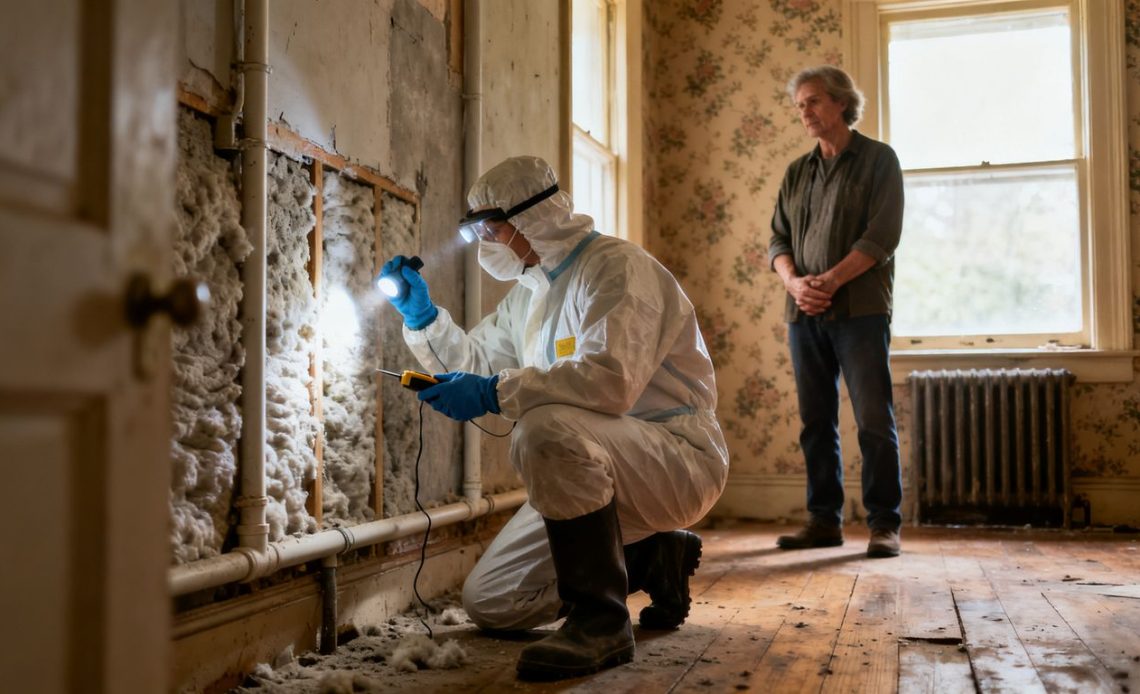
Asbestos was used in a range of building products because its fibers resist heat and add strength. In an older home, it may be part of a material that looks ordinary, and appearance alone cannot confirm what it contains. The concern is usually not simply that a material is present, but whether fibers can be released and breathed in. Understanding where asbestos may be found helps residents avoid disturbing it.
Building materials that may contain asbestos
Depending on the home’s age and renovation history, asbestos may be present in some insulation, flooring, roofing, siding, or textured finishes. It has also been used in certain cement products, adhesives, and pipe coverings. These are examples, not a way to identify a particular material by sight; asbestos building materials can vary in appearance and composition.
Common places where asbestos-containing products have been found include:
- Insulation around pipes, boilers, or ducts
- Older vinyl floor tiles and the material used to attach them
- Some roofing, siding, and cement products
- Certain textured coatings or joint compounds
The list is not exhaustive, and a product’s age does not prove it contains asbestos. When identification matters, a qualified professional can arrange appropriate assessment rather than relying on a visual guess.
When aging or damaged materials can release fibers
Asbestos fibers are most likely to become a concern when a material containing them is damaged, crumbling, or disturbed. An intact product that is in good condition may release few fibers under ordinary use, while deterioration, water damage, or abrasion can change the situation. Condition matters as much as location when considering whether a material could release fibers.
Residents should avoid touching debris or trying to clean up suspected material themselves. If damage is present, limiting access to the area and seeking professional advice can help reduce the chance of spreading dust through the home.
How renovation and repair work can disturb asbestos
Cutting, drilling, sanding, scraping, or removing a building product can release fibers if asbestos is present. Even a small repair may create dust, and household tools or cleanup methods may move that dust beyond the original work area. A renovation plan should therefore account for the possibility of asbestos before work begins, especially in older buildings.
A homeowner who is unsure about a material can pause the project rather than test it by disturbing it. That short delay is generally safer than creating dust that may be difficult to contain or remove.
How fibers can travel on clothing, shoes, and equipment
Fibers released during work can settle on clothing, footwear, tools, or other items. If those items are carried into a home or vehicle, dust may be transferred to floors and furnishings. This is one reason household exposure can occur without a resident personally handling the original material.
When asbestos work is suspected or confirmed, people should follow the professional’s instructions about access and handling belongings. Ordinary sweeping or vacuuming may not be appropriate for asbestos-contaminated dust and can spread it instead.
How asbestos exposure can lead to mesothelioma
Mesothelioma is a cancer that develops in the thin tissue lining certain internal organs, most often around the lungs. Asbestos exposure is its established cause, although not everyone who encounters asbestos develops the disease. Fibers can enter the body when airborne dust is inhaled and, in some circumstances, swallowed. The relationship between asbestos fibers and mesothelioma has been studied through laboratory and population research.
What happens when asbestos fibers are inhaled or swallowed
When airborne asbestos dust is breathed in, some fibers can reach the lungs. Fibers may also be swallowed after clearing from the airways into the throat, and can then pass through the digestive system. The body can remove some inhaled particles, but some fibers may remain in tissue for a long time.
The route and amount of exposure can differ from one circumstance to another. A person’s history of possible contact is therefore useful context for a clinician, but it cannot establish by itself whether disease will develop.
How fibers can affect the lining of the lungs or abdomen
Mesothelioma most often begins in the pleura, the lining around the lungs, and can also arise in the peritoneum, the lining of the abdomen. Asbestos fibers that persist in the body may contribute to changes in nearby cells over time. The precise biological steps are complex, and exposure does not mean that cancer is inevitable.
Mesothelioma is distinct from asbestosis, a noncancerous scarring disease of lung tissue. The differences between asbestosis and mesothelioma matter because symptoms can overlap even though the conditions are not the same.
Why repeated or prolonged exposure can increase risk
Risk generally rises with greater cumulative exposure, which can reflect the amount of asbestos in the air, how often contact occurs, and how long it continues. Repeated disturbance of a material may create more opportunities to breathe in fibers than a single encounter. However, exposure circumstances are rarely captured by one simple measure, particularly when they occurred years earlier.
This pattern helps explain why people with sustained occupational or household contact may face greater concern, without allowing a precise prediction for any individual. Risk factors and uncertainty are discussed in this overview of asbestos-related disease risk.
Why mesothelioma may develop decades after exposure
Mesothelioma often takes many years to appear after the exposure that contributed to it. During that long interval, a person may have no symptoms and may not remember the details of contact. The delay can make it difficult to connect a diagnosis with a past job, renovation, or household source.
A long gap does not rule out a connection, nor does it confirm one. If a medical evaluation becomes necessary, even an approximate timeline of possible exposure can provide useful background.
Who may face asbestos exposure at home
Household exposure can arise in different ways, and the people at risk are not limited to those who worked directly with asbestos. Residents may encounter dust from damaged materials or from work carried out in a home. Family members may also have contact with fibers brought home from a job. These possibilities are reasons for care, not grounds to assume that an individual has been exposed or will become ill.
Residents of older homes with asbestos-containing materials
People living in older homes may be near asbestos-containing materials, particularly if original products remain in place. If such materials are sealed, intact, and left undisturbed, they may not release fibers into the living space. Repairs, deterioration, or remodeling can change that circumstance, so condition and planned work deserve attention.
The home’s age alone cannot identify asbestos. Where there is a concern, residents can avoid disturbing the material and ask a qualified professional about assessment.
Family members of workers exposed to asbestos on the job
In the past, workers could carry asbestos dust home on clothing, shoes, hair, or equipment. Household members who handled dusty work clothes or shared a space where contaminated items were kept may have had indirect contact. The likelihood and extent of any exposure depend on the work and on how materials were handled.
A family history of this kind is worth mentioning to a healthcare provider if relevant, but it does not establish that fibers reached a particular person or that disease will follow. Recollections about the job, dates, and clothing or equipment practices may help clarify the circumstances.
People who renovate or repair buildings without proper precautions
Residents, contractors, or do-it-yourself renovators may disturb asbestos-containing products while opening walls, replacing floors, or repairing pipes. The work can create airborne dust, especially when it involves breaking, sanding, or cutting. Even someone who enters later may encounter settled dust if the work area was not properly controlled.
Before starting work in an older building, it is prudent to find out whether materials need assessment. A project should stop if suspicious material is uncovered, rather than continue until its composition is known.
How exposure circumstances vary from home to home
The possibility of exposure depends on the materials in a building, their condition, and what activities have taken place. One home may have intact products that are never disturbed; another may have had repeated repairs that generated dust. Ventilation, work practices, cleanup, and the movement of clothing or tools can also affect where fibers travel.
These differences make broad comparisons unreliable. A careful account of the actual home, work, and timing is more useful than trying to infer risk from the age of a building alone.
What affects the risk of mesothelioma
No single detail can determine whether someone will develop mesothelioma. The nature of asbestos exposure is important, but individual outcomes vary, and a person may not know exactly what materials or airborne levels were involved. Risk is best considered as a set of circumstances rather than a simple yes-or-no label. For someone concerned about the past, documenting what is known, and what remains uncertain, can be a sensible first step.
The amount, duration, and frequency of exposure
The amount of fiber-containing dust in the air, the length of contact, and how often it occurred all contribute to cumulative exposure. Repeated contact over time generally presents more concern than a lower or shorter exposure, but these factors cannot produce a personal forecast. Past exposures are especially difficult to measure if no monitoring or records were kept.
A clinician or occupational health professional may ask about the task, location, frequency, and protective measures involved. Approximate answers are still useful when exact details are unavailable.
The type and condition of asbestos-containing material
Different products can vary in how firmly fibers are bound within the material. A solid product left undamaged may behave differently from friable or deteriorating insulation that can shed dust when disturbed. The work performed on the material also matters: breaking or sanding it can change the potential for fibers to become airborne.
Because appearance is not a reliable way to determine composition or condition, residents should not handle a suspect product to investigate it. Professional assessment is the safer route when identification is needed.
Why brief exposure does not predict an individual outcome
A brief encounter cannot be used to calculate an individual’s future health. It may represent a limited exposure, but the details, such as dust levels, fiber type, and whether contact happened more than once, may be unknown. At the same time, exposure does not mean a person will develop mesothelioma.
The most accurate approach is to avoid both false reassurance and unwarranted certainty. Someone with concerns can share the known circumstances with a healthcare provider, who can consider them alongside symptoms and medical history.
How smoking relates to asbestos-related disease
Smoking does not cause mesothelioma, and quitting does not erase past asbestos exposure. However, smoking is harmful to lung health and, together with asbestos exposure, can greatly increase the risk of lung cancer. The risks of lung cancer and mesothelioma are related to different disease processes and should not be conflated.
People who smoke and have a history of asbestos exposure can discuss cessation support and appropriate health screening with a clinician. That conversation can address lung health without treating smoking as a cause of mesothelioma.
Recognizing possible signs and seeking medical evaluation
Symptoms associated with mesothelioma can also occur with many more common conditions. They do not confirm asbestos-related disease, but persistent or unexplained changes deserve medical attention. A clinician can assess the symptoms, consider other explanations, and decide whether further testing is appropriate. Sharing a possible exposure history may help make that evaluation more complete.
Symptoms that may warrant a medical appointment
Possible symptoms can include persistent shortness of breath, chest discomfort, a lasting cough, or abdominal pain or swelling. Unexplained fatigue or weight loss may also warrant discussion with a healthcare provider, particularly when symptoms persist or worsen. These signs have many potential causes, so they should be evaluated in context rather than attributed automatically to asbestos.
For severe or sudden breathing difficulty or chest pain, urgent medical care may be needed. For ongoing symptoms, arranging a routine appointment is a reasonable way to begin investigating them.
Why symptoms alone cannot diagnose mesothelioma
There is no symptom pattern that can reliably distinguish mesothelioma from other illnesses. Even when a person has a history of possible asbestos exposure, that history and the symptoms alone do not establish a diagnosis. A clinician must consider examination findings and, when warranted, test results.
This distinction can prevent both premature conclusions and delays in getting care for another condition. Medical evaluation is the appropriate way to determine what may be causing a person’s symptoms.
What exposure history to share with a healthcare provider
A useful history can include the type of work or home project involved, the building’s approximate age, the materials disturbed, and the dates or duration of contact. It may also help to mention whether clothing, shoes, or tools could have carried dust into the home. Details do not need to be exact; estimates and uncertainties can be stated plainly.
If available, records such as work histories or renovation documents may help fill in gaps. The purpose is to give the clinician context, not to prove exposure through memory alone.
Tests clinicians may use to investigate symptoms
Depending on the symptoms and examination, clinicians may use imaging, such as chest X-rays or CT scans, to look for changes. Blood tests may be considered as part of an evaluation, but they cannot by themselves confirm mesothelioma. If imaging or other findings raise concern, a clinician may recommend additional procedures, including a biopsy, to examine tissue.
The appropriate tests depend on the individual case, and not everyone with possible exposure needs the same workup. A healthcare provider can explain what each test can and cannot show and what should happen next.
Reducing the risk of exposure at home
The most practical way to reduce household risk is to prevent fibers from becoming airborne and spreading. Suspected asbestos-containing material should not be disturbed simply to identify it or make a repair. If a material is damaged or a project is planned, a qualified professional can advise on assessment and safe next steps. Keeping people away from a potentially affected area while seeking advice may help avoid unnecessary contact.
How to respond to suspected asbestos-containing material
If a material looks damaged or is uncovered during a project, residents should stop work and avoid touching it. Keep others away from the immediate area, and do not sweep, vacuum, or carry loose debris through the home. A professional can help determine whether testing or other action is appropriate.
There is no reliable visual shortcut for confirming asbestos. Leaving the material undisturbed while arranging advice is generally safer than trying to collect a sample without proper training.
Why not to cut, sand, drill, or remove it yourself
These activities can break a material apart and release fibers into the air. Household vacuums, fans, or dry sweeping may then spread dust rather than contain it. Protective equipment used without the right methods does not make do-it-yourself removal a dependable safeguard.
For those reasons, residents should not attempt to cut, sand, drill, or remove suspected asbestos-containing products. Pausing a repair protects both the person doing the work and others who use the home.
When to contact a qualified asbestos professional
Professional advice is appropriate before renovation that may affect suspect materials, and when a product is damaged or debris is present. Depending on the situation, an asbestos professional can assess the material, arrange sampling, or recommend qualified abatement work. Residents can ask about relevant training, licensing requirements in their area, and how the proposed work will be contained.
The right response depends on the material and its condition; removal is not automatically necessary in every case. A qualified assessment helps determine whether monitoring, repair, or removal is appropriate.
How to limit the spread of fibers during professional work
Professional work should be planned to keep dust from moving into occupied parts of the home. Depending on the job, this can involve restricting access, isolating the work area, using suitable containment and equipment, and following applicable disposal requirements. Residents should follow the contractor’s directions about where to stay and when it is safe to return.
After work, they can ask what cleanup and clearance steps were completed and whether any precautions remain. Clear communication helps households understand the work without handling materials or debris themselves.